

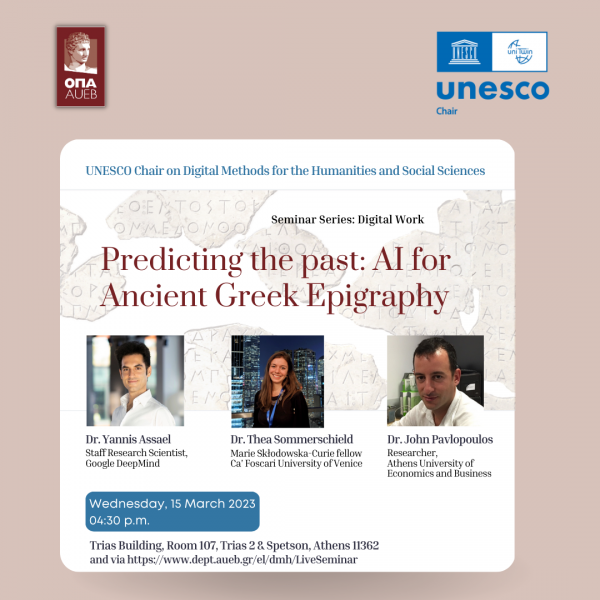
"Predicting the past: AI for Ancient Greek Epigraphy", Yannis Assael, Thea Sommerschield, John Pavlopoulos, 15.3.23, 16:30
UNESCO Chair on Digital Methods for the Humanities and Social Sciences
Seminar Series: Digital Work
Wednesday, 15 March 2023, 4:30 p.m.
Trias Building, Room 107, Trias 2 & Spetson, Athens 11362
and online via: https://www.dept.aueb.gr/el/dmh/LiveSeminar
Speakers:
Dr. Yannis Assael, Staff Research Scientist, Google DeepMind
Dr Thea Sommerschield, Marie Skłodowska-Curie fellow, Ca' Foscari University of Venice
Dr. John Pavlopoulos, Researcher, Athens University of Economics and Business
Topic: Predicting the past: AI for Ancient Greek Epigraphy
Abstract
Ancient history relies on disciplines such as epigraphy - the study of inscribed texts known as inscriptions - for evidence of the thought, language, society and history of past civilizations. However, over the centuries, many inscriptions have been damaged to the point of illegibility, transported far from their original location and their date of writing is steeped in uncertainty. In this talk we will present Ithaca, the first deep neural network for the textual restoration, geographical attribution and chronological attribution of ancient Greek inscriptions. Ithaca is designed to assist and expand the historian’s workflow. The architecture of Ithaca focuses on collaboration, decision support and interpretability. While Ithaca alone achieves 62% accuracy when restoring damaged texts, the use of Ithaca by historians improved their accuracy from 25% to 72%, confirming the synergistic effect of this research tool. Ithaca can attribute inscriptions to their original location with an accuracy of 71% and can date them to less than 30 years of their ground-truth ranges, redating key texts of Classical Athens and contributing to topical debates in ancient history. Ithaca actively demonstrates how Artificial Intelligence can unlock the cooperative potential of the Sciences and the Humanities, for a better understanding of our nature and transformationally impacting the study of one of the most significant periods in human History.
Yannis Assael
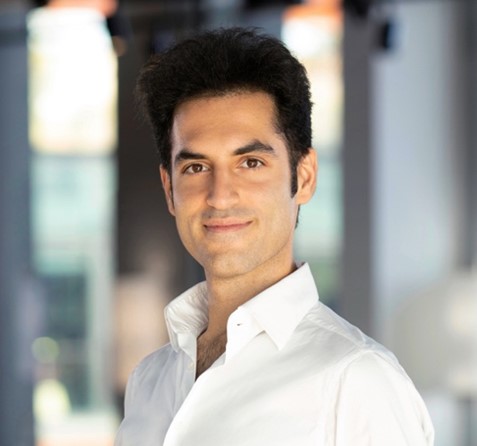
Dr. Yannis Assael is a Staff Research Scientist at Google DeepMind working on Artificial Intelligence, and he is featured in Forbes' "30 Under 30" distinguished scientists of Europe. In 2013, he graduated from the Department of Applied Informatics, University of Macedonia, and with full scholarships, he did an MSc at the University of Oxford, finishing first in his year, and an MRes at Imperial College London. In 2016, he returned to Oxford for a DPhil degree with a Google DeepMind scholarship, and after a series of research breakthroughs and entrepreneurial activities, he started as a researcher at Google DeepMind. His contributions range from audio-visual speech recognition to multi-agent communication and AI for culture and the study of damaged ancient texts. Throughout this time, his research has attracted the media's attention several times, has been featured on the cover of the scientific journal Nature, and focuses on contributing to and expanding the greater good.
Thea Sommerschield
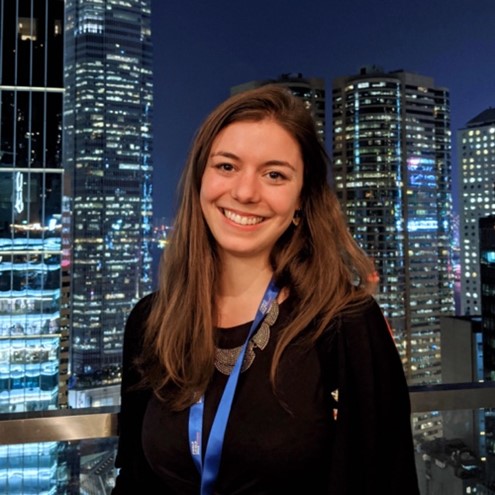
Thea Sommerschield is a Marie Skłodowska-Curie fellow at Ca’ Foscari University of Venice. Her research uses machine learning to study the epigraphic cultures of the ancient Mediterranean world. Since obtaining her DPhil in Ancient History at the University of Oxford in 2021, she has been the Ralegh Radford Rome Awardee at the British School at Rome, Fellow in Hellenic Studies at Harvard’s Center for Hellenic Studies and Research Innovator at Google Cloud. She co-led the Pythia (2019) and Ithaca (2022) projects, and has worked extensively on Sicilian epigraphy.
John Pavlopoulos
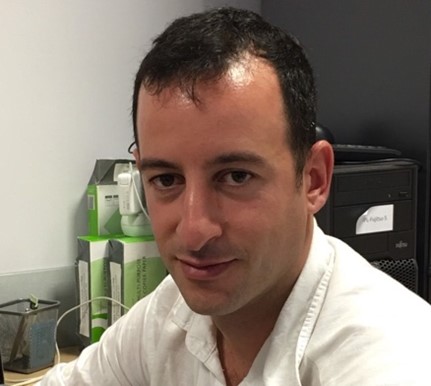
John Pavlopoulos is a researcher currently affiliated with the Athens University of Economics and Business (AUEB) and Stockholm University (SU). Before that, he was a visiting scholar at Ca' Foscari University of Venice (Venice Centre for Digital and Public Humanities) and a senior lecturer (fixed-term) at SU. His BSc was in Applied Mathematics and Physical Sciences at the National Technical University of Athens, his MSc was in Artificial Intelligence at the University of Edinburgh, and his Ph.D. at AUEB was focused on aspect-based sentiment analysis. His research is focused on machine learning for natural language processing and his recently published work concerns opinion polarization, toxic language detection and mitigation, diagnostic captioning, Homeric computational authorship analysis, and Ithaca.